Case Study: Horde
Designing Financial Wellness That People Can Actually Stick With
Overview
Horde is a financial wellness app designed to help people build sustainable saving habits without feeling overwhelmed, guilty, or stressed. Instead of focusing only on numbers and strict budgeting systems, Horde reimagines saving as something visual, social, and emotionally supportive.
This project began with one core question:
Why do people want to save money, but struggle to stay consistent?
Design Goal
Our goal shifted from “help users budget better” to something deeper:
Help users build a saving habit they can realistically maintain.
We wanted to:
Make saving feel less intimidating
Create visible, motivating progress
Reduce friction and stress
Encourage positive reinforcement instead of guilt
Offer optional social accountability
The Problem
Through interviews and research, we discovered something important:
Most people don’t struggle with saving because they don’t care or don’t understand money.
They struggle with consistency.
Many existing budgeting tools are technically helpful, but emotionally exhausting. Users often start motivated, but gradually stop using the tools because they feel:
Overwhelmed by numbers
Discouraged by constant breakdowns
Pressured by rigid systems
Stressed by setup and maintenance
We also noticed that many users already have their own systems — spreadsheets, notes apps, or even mental tracking. The issue wasn’t access to tools. It was that current tools didn’t fit naturally into their lives.
Another key insight:
Money is emotional and social, not just mathematical.
Financial education varies widely by age and background. Many people compare their spending to friends without realizing it. At the same time, money remains a topic people rarely discuss openly. Saving isn’t just a technical challenge — it’s influenced by stress, confidence, and social pressure.
We realized users didn’t just need information.
They needed support.
They wanted a way to stay on track without feeling overwhelmed, judged, or alone.
Research & Ideation
We began by studying apps that successfully keep users engaged long-term — especially habit-building and fitness apps.
What stood out was this:
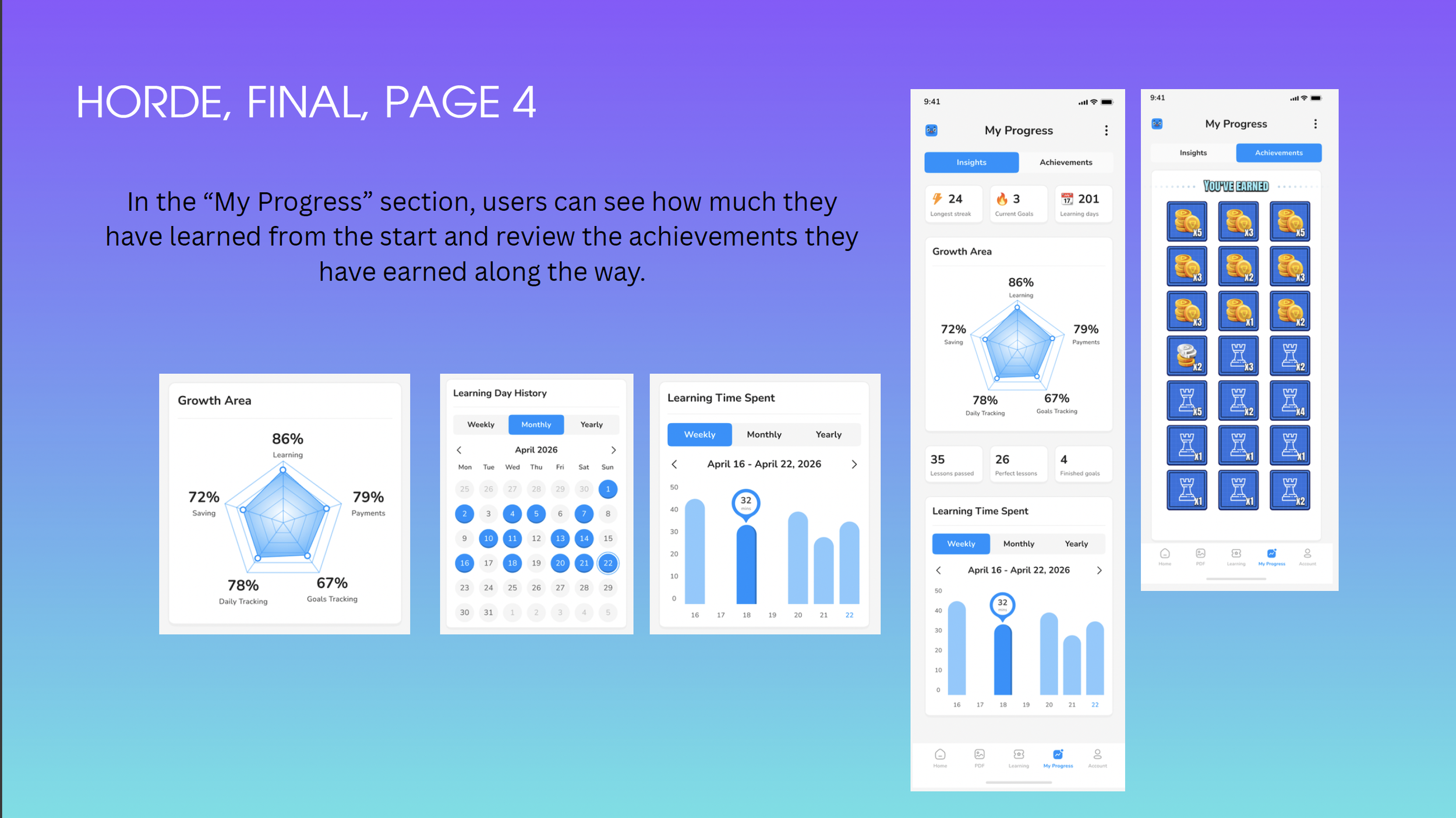
People stay consistent when they can see their progress.
Apps with strong engagement used:
Streaks
Badges
Levels
Small incremental rewards
Customization
Visual growth systems
Users were motivated by tangible representations of progress, not just data.
During early sketching, we experimented with:
Progress bars
Growing visuals
Reward points
Habit streaks
Even in rough prototype form, one thing became clear:
Watching something grow over time is more motivating than reading statistics.
However, we faced an important constraint.
We didn’t want to over-gamify.
Money is serious. If the app felt too playful or “fluffy,” users might not take it seriously. So our design process became about balance:
Fun vs. professional
Motivating vs. responsible
Friendly vs. reliable
We shifted from large milestone rewards to smaller, immediate feedback loops. People are more likely to stay consistent when progress feels immediate, not weeks away.
We also introduced collaborative saving — but made it optional. Accountability can be powerful, but we didn’t want social pressure to feel forced.
By the end of ideation, our mindset had evolved:
We weren’t building a budgeting tool.
We were building a habit-forming experience.
The Solution: Horde
Horde transforms saving from a passive tracking task into an interactive, emotionally engaging experience.
1. Visual Growth Through Avatars
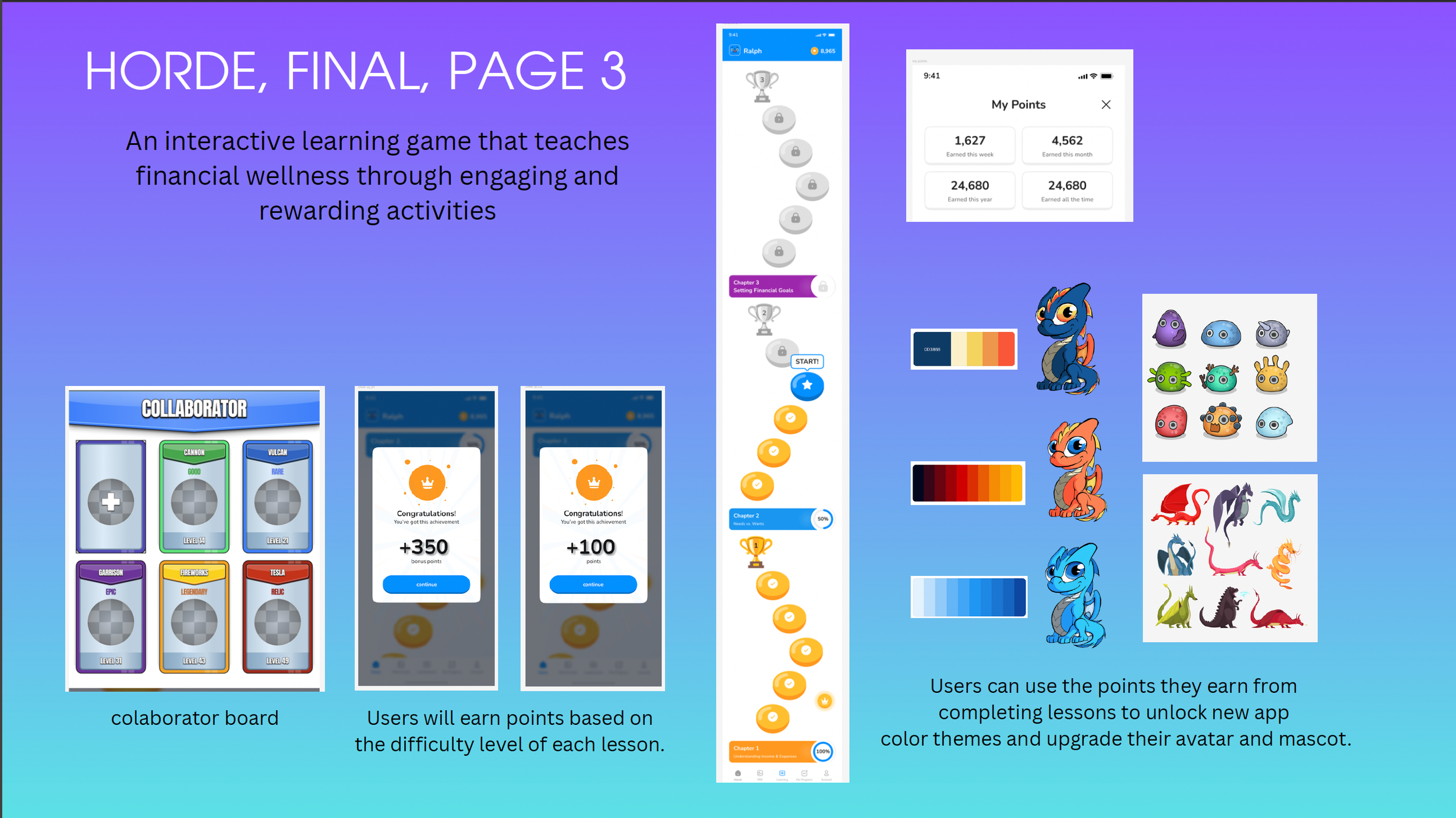
At the center of Horde is a dragon avatar that grows and evolves as savings increase.
Instead of just watching numbers change, users see visible progress. Their dragon expands, customizes, and becomes uniquely theirs over time.
This creates emotional investment.
Saving becomes something users nurture — not just monitor.
2. Incremental Rewards & Momentum
Many users lose motivation because financial goals feel slow and distant.
Horde solves this by offering:
Small, frequent wins
Positive reinforcement
Encouraging feedback
Rather than focusing only on distant milestones, Horde builds momentum through incremental progress.
Consistency becomes the reward.
3. Optional Social Collaboration
Money is deeply social, even when we don’t talk about it.
Horde allows users to:
Create shared savings goals
Partner with friends or family
Collaborate without public comparison
This feature is optional — designed to encourage positive influence without pressure.
College roommates can save together.
Families can make financial education informal and engaging.
Collaboration becomes supportive, not competitive.
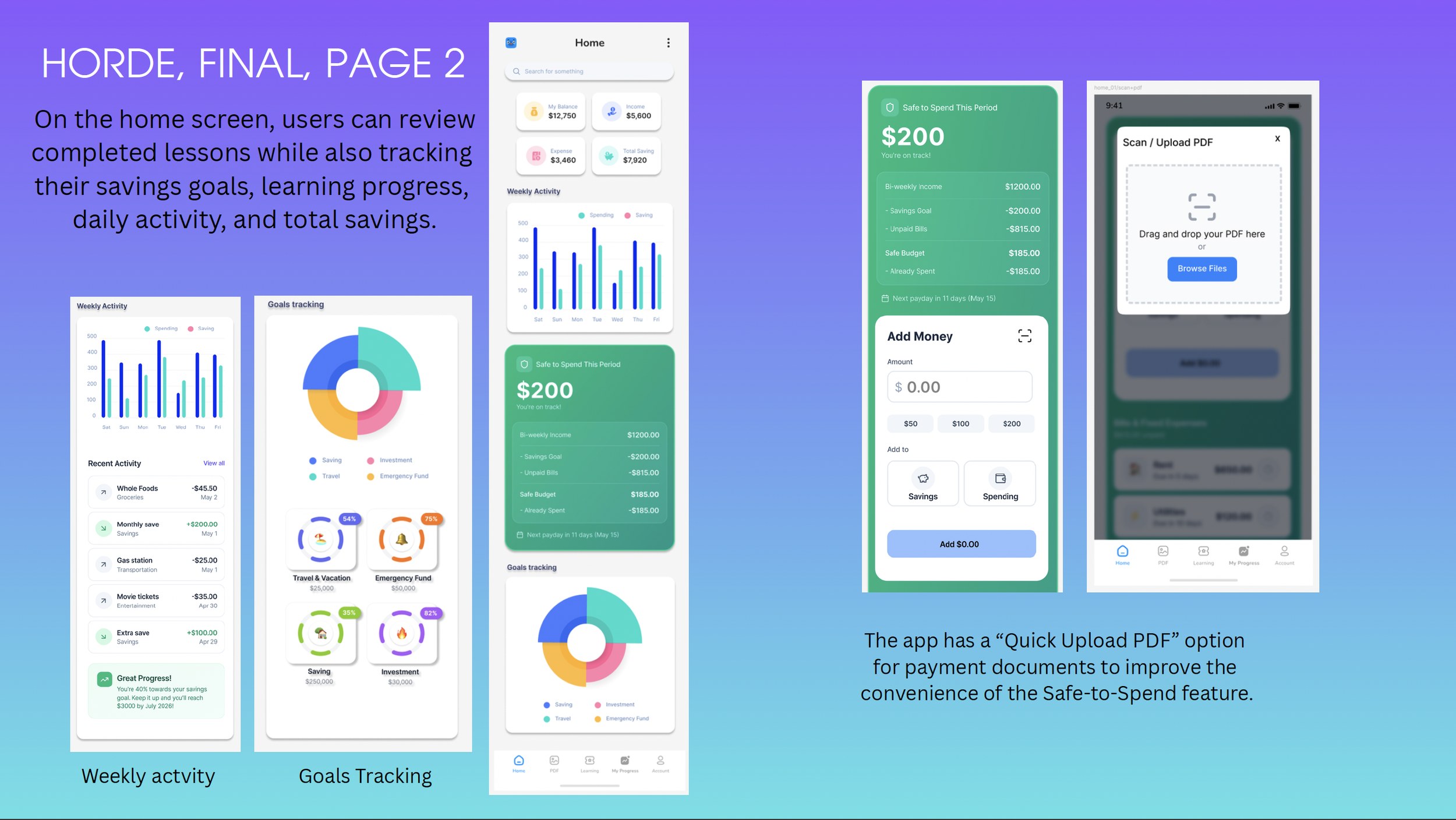
4. “Safe to Spend” Feature
Traditional budgeting tools often focus on restrictions and warnings.
Horde reframes budgeting by showing users what they can safely spend — with peace of mind.
Instead of fear-based alerts, we emphasize empowerment.
Budgeting becomes clarity, not constraint.
5. Low-Friction & Privacy-Conscious
We designed Horde to feel simple and non-invasive.
Users can:
Connect their bank account
Or manually enter expenses
No overwhelming setup.
No constant tracking pressure.
The goal was to reduce friction so the app feels like relief, not another task.
Impact
Horde addresses the emotional gap in financial tools.
Instead of asking:
“How can we track money better?”
We asked:
“How can we make saving feel sustainable?”
By combining:
Visual motivation
Incremental rewards
Optional collaboration
Empowering budgeting
Low-friction design
Horde turns financial wellness into a habit-building experience.
Reflection
This project evolved dramatically from start to finish. There was no single solution that solved financial wellness completely. Instead, we treated it as a layered problem.
Horde became an experiment in combining small, thoughtful pieces:
Gamified engagement
Emotional reinforcement
Visual growth
Social support
Privacy and simplicity
Everything — from color choices to avatar customization — was intentionally designed to make money feel less stressful and more approachable.
Next Steps
Moving forward, we envision:
Testing across college campuses
Iterating through user feedback
Expanding collaborative features
Refining educational components
Strengthening privacy controls
We believe collaboration, education, avatar customization, and accessible privacy features are the most important pillars to improve in future iterations.
Financial education should feel accessible.
Saving should feel achievable.
And building healthy money habits shouldn’t feel lonely.
-
![An image of the Float House.]()
01
-
![An image of The Float House.]()
02
-
![An image of the Float House.]()
03